National Conference Presentations 2026
The video presentations from our 2026 Assessment Conference are live!
Scroll down for the video presentations from our annual National Assessment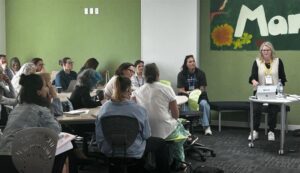 Conference in April 2026. The conference theme this year was:
Keeping Assessment where It Belongs: Still at the Heart of Learning
Once again our conference was held face-to-face over two days. The recordings you are accessing here were all filmed live. The keynote addresses were filmed professionally, worthwhile but expensive, so we were lucky enough to engage the services of Ormiston Junior College film club, Year 7-10 students, to video the workshops as part of their learning and development in videography. If the quality of the recordings is a little shaky at times, we ask you to be understanding and applaud the students for their time and effort. We are extremely grateful for their assistance.
Almost all of the presentations from the 2026 conference can be found here, with keynote addresses first and workshops in the same order as they happened over the two days. Scroll through to choose the workshops you want to watch or you can filter through the ‘Category’ drop down menu in the top left hand corner.
Slides used in the presentations are included where they are available. Click into the title of the workshop you choose and you’ll find the slides at the bottom of the workshop description on the next page.
Dive in and enjoy at your leisure. And don’t forget that there are videos of presentations from previous conferences here on our site, well worth a browse.
To refresh the table back to its original order click here
Title Summary Category hf:doc_tags 
The Honourable Erica Stanford is the current Minister of Education in the National Government, attending the NZAI conference for the third time. In this keynote address she speaks of what is being done at the system and the classroom level to achieve our common goal of raising achievement and increasing equity. She speaks of the immediate need for changes to the education system to turn around falling achievement numbers in international testing and national monitoring and, importantly, a large equity gap. The Minister explains that a fundamental curriculum shift is being enacted, from one which emphasised learning competencies and self … curriculum refresh, government policy, keynote address, system change, years 0 to 13 curriculum-refresh government-policy keynote-address system-change years-0-to-13 
Jann Marshall, Deputy Chief Executive, Assessment at NZQA, speaks about the role of NZQA during a time of change for assessment in New Zealand. She says it is important that we maintain a focus on ensuring that NCEA remains robust and credible during the transition to a new qualification. “We know that NCEA is being replaced by a new qualification and assessment system designed specifically for New Zealand, with many details of this still to be finalised. We are travelling in a time of uncertainty and must be led by our values to ensure that we have qualifications and credentials that … keynote address, NCEA, NZQA, system change keynote-address ncea nzqa system-change 
Nathan Durie speaks as co-tumuaki of TIPENE. “We are deeply honoured to step into the leadership of TIPENE as we begin the next chapter in the life of this iconic kura. As the needs of young men evolve, so too must our educational approach—one that is responsive, future-focused, and grounded in kaupapa Māori. Our vision is to empower rangatahi with the skills, confidence, and cultural grounding to be active contributors and leaders within their whānau, marae, and iwi. We are unwavering in our commitment to ensuring TIPENE is not only relevant in today’s educational landscape, but a powerful force for … cultural grounding, equity, keynote address, Māori education, transformation cultural-grounding equity keynote-address maori-education transformation 
In this talk, Daisy Christodoulou, prominent UK-based educational researcher and commentator, explores how one assessment system can serve multiple audiences at once. Assessment systems are often pulled in different directions. Teachers need information to guide day-to-day teaching, school leaders need reliable signals about curriculum and standards, parents and students want clear feedback on progress, and politicians want international comparisons. How can we reconcile all of these purposes and design an assessment system that makes everyone happy without overburdening schools and students? The talk sets out practical techniques teachers and leaders can use to ensure assessments are both accurate and useful, … artificial intelligence, Assessment coherence, assessment systems, keynote address, practical techniques artificial-intelligence assessment-coherence assessment-systems keynote-address practical-techniques 
This keynote by Neil Watson, Principal of Ōtāhuhu College, explores why a strong, cohesive school culture is essential for meaningful and lasting improvement. He highlights how aligning the four key aspects of a school- students and families, staff, curriculum and facilities creates consistency and shared purpose. When these elements work together, they strengthen expectations, support student wellbeing, and enhance staff effectiveness. Ultimately, this alignment helps lift achievement and ensures that each and every student benefits. Neil has been Principal of Ōtāhuhu College since 2013. With a teaching career that began in 1993, he brings extensive experience in educational leadership, including … consistency, keynote address, school culture, shared purpose, students and families consistency keynote-address school-culture shared-purpose students-and-families 
In times of significant change in education, there is a danger of feeling overwhelmed and focusing on the minutiae. It is important to take time to pause and focus on what really matters. In this somewhat light-hearted and playful address, Professor Poskitt gives us a fresh way of framing how assessment can be at the heart of learning. Using some known and surprising acronyms, she reminds us how to keep assessment simple and useful in our educational practice. Professor Jenny Poskitt is Director of College Projects in the College of Humanities and Social Sciences at Massey University (MU), and … assessment for learning, education policy, keynote address assessment-for-learning education-policy keynote-address 
Denise Horley, Principal of Sandspit Road School and Dr Beverley Booth, Principal of Devonport Primary, discuss the role of the leader in times of educational change “How do we keep our eyes on the prize when everything around us is changing and changing quickly? How do we lead a calm approach that allows the teachers to keep teaching whilst leadership handles the noise?” Denise has been in education since 1993. She has been in several leadership roles including SENCo, Curriculum Lead, Assessment for Learning In-School Leader, Deputy Principal and has been Principal at Sandspit Road School for three years. Inspired … leadership, resilience, system change leadership resilience system-change 
Dale Bailey, CEO of Te Uru Amokura | Springboard Trust in Auckland, explains how the Trust works closely with principals and school leaders to help them lead their schools strategically. “By bringing school leaders and volunteers from the business and corporate sector together we develop deeper understanding of the work of schools and a focus. There are so many demands on schools today, so prioritisation and alignment is vitally important. Our programmes are well researched and evaluated. Principals report our programmes are the best learning of their leadership careers. We will share some of the evidence of impact, some of … school/business partnerships, strategic leadership school-business-partnerships strategic-leadership 
This workshop discusses how Collaborative Complex Problem Solving was part of enabling success at Dannevirke South- working through challenging problems to make a real difference for the tamariki. “This is our journey of how we worked as a team, gathering support staff, Board, whānau, and teachers’ voices to identify the barriers preventing our children from making expected progress. Lifting the Lid for our learners and making real change in our kura was our goal. Collaborative Complex Problem Solving (CCPS) was a major part of the magic and helped us think, evaluate and make changes. This presentation tells the story of … Collaborative Complex Problem Solving, identifying barriers to learning, making change collaborative-complex-problem-solving identifying-barriers-to-learning making-change 
The Year 7–8 Maths Acceleration Programme provides targeted support for students not yet ready to access Phase 3 of the Mathematics and Statistics learning area of the New Zealand Curriculum. This workshop, led by Heather Lewis, introduces the 12-week acceleration programme developed following the successful 2025 national tutoring trial. Participants explored the key learning areas identified as critical for accelerating progress: number structure and operations, multiplication and division fluency, rational numbers (fractions, decimals and percentages), and strategies for reasoning and solving word problems. Insights are shared from the nationwide trial involving nearly 3,000 students, where targeted small-group tutoring led to … maths acceleration, years 7 and 8 maths-acceleration years-7-and-8 
This workshop, led by Darcy Fawcett, provides an introduction to statistical testing for senior secondary teachers and leaders who want to learn how to use NCEA assessment data and research-level statistics to evaluate and ‘prove’ the impact of their initiatives on NCEA achievement. We cover graphics, statistical tests and effect sizes appropriate to analysing NCEA grades, credits and qualifications. Statistical tests will include cohort comparisons (e.g., comparing this year with previous years, female with male, …) and theoretical comparisons (e.g, comparing school distribution with national averages. The workshop consists of a survey of prior knowledge, a theoretical lecture, a guided … measuring impact, NCEA, statistical analysis measuring-impact ncea statistical-analysis 
PAT assessments are formative, low-stakes assessments designed to support teaching and learning. NZCER Assist can generate a range of reports designed to help teachers, leaders and whānau get a sense of progress and achievement, surface strengths and next learning steps, and identify patterns and trends. This workshop, led by Julie Roberts, explores the range of aggregate, progress over time and learner reports. Learn how to discover the story in your data, ways to effectively filter, and how to use this information to support teaching and learning, inquiry, and strategic decision making. Updated features in reports are shared during the session … data analysis, progress and achievement, Progressive Achievement Tests data-analysis progress-and-achievement progressive-achievement-tests 
Over the past nine years, thousands of students have joined my livestream maths revision sessions the night before exams on YouTube. In these sessions students ask questions openly about what they do not understand, providing a rare and honest insight into the gaps in their learning. This workshop explores what these questions reveal about how students prepare for assessment, the misconceptions they carry, and how teachers can use similar approaches to gather powerful formative assessment evidence. Participants will explore how digital platforms, student voice, and real-time questioning can help shift assessment from simply measuring learning to actively improving it. Subash … formative assessment, maths revision sessions, real time learning formative-assessment maths-revision-sessions real-time-learning 
This workshop shares our school’s journey of realigning Developing Mathematical Inquiry Communities (DMIC) with the refreshed mathematics curriculum using the Complex Problem Solving (CPS) improvement model. Following the introduction of the new curriculum, we identified a growing misalignment between established DMIC practices and curriculum expectations. Through a structured five stage improvement process, we clarified the core problem, identified root causes, defined solution requirements, and implemented curriculum aligned task design and leadership shifts. Participants will explore how we balanced fidelity to DMIC reasoning and rich pedagogy with strengthened curriculum sequencing and assessment clarity. We will share evidence of impact including improved … assessment clarity, complex problem solving, DMIC (Developing Mathematical Inquiry Communities) assessment-clarity complex-problem-solving dmic-developing-mathematical-inquiry-communities 
Does digital assessment (DA) enhance learning and learner success, or merely prioritise efficiency and novelty? Drawing on a scoping review of 64 studies, this workshop explores the tension between automation and the need for meaningful mathematical communication. Kaitlin Riegel begins with an interactive “Micro-Experience,” simulating how students may experience DAs. Using these lived experiences as a live dataset, she interrogates how DA influences students, with particular attention given to equity, engagement, and attitude. In small groups, participants then redesign a standard digital assessment task, applying evidence-based strategies to restore the “heart of learning”. Bridge the gap between technical scalability and … digital assessment, pedagogical depth, technical scalability digital-assessment pedagogical-depth technical-scalability 
This workshop, led by Sarah Gemin, explores how Assessment for Learning (AfL) can be extended to better support twice-exceptional students—those identified as gifted or high achieving with at least one additional neurodivergence such as ADHD, autism, or dyslexia. Drawing on qualitative research with six twice-exceptional students and their teachers across four Auckland primary schools, the workshop examines how these learners experience assessment in AfL classrooms. While practices such as success criteria and self-assessment aim to position students as partners in learning, findings suggest that twice-exceptional students often require deeper dialogue to be appropriately supported and challenged. Many are already engaged … assessment for learning, twice-exceptional assessment-for-learning twice-exceptional 
This workshop provides an introduction to statistical testing for primary, intermediate and junior secondary teachers and leaders who want to learn how to use their assessment data, pre- and post-testing, and research-level statistics to evaluate and ‘prove’ the impact of their initiatives on student achievement and learning. We will cover graphics, statistical tests and effect sizes appropriate to analysing e-asTTle, PAT, and SMART scores, curriculum levels and overall teacher judgements. Statistical tests will include cohort comparisons (e.g., comparing this year with previous years, female with male, …), theoretical comparisons (e.g, comparing school distribution with national averages), and subgroup-group comparisons (e.g, … junior assessments, measuring impact, statistical analysis junior-assessments measuring-impact statistical-analysis 
Attendance and engagement have been a hallmark of school workload over the last 10 years and particularly since returning from COVID lockdowns. Listen to Ben Hutchings, Principal of Mountain View School, speak about what has been done at his school over the last five years to see some consistently good results in re-engaging and maintaining engagement. Ben has been at Mountain View School since 2021 and is the current president of the Mangere Principals’ Association. The trials and tribulations of being a first time principal and starting in a school in the middle of COVID have meant skinning cats in … attendance, engagement, lifting achievement attendance engagement lifting-achievement 
This workshop, led by Callum Baird, explores how to design assessment systems that are efficient, coherent, and genuinely useful. Too often, schools collect large volumes of data without clarity about what it measures or how it drives improvement. This session focuses on removing unnecessary noise from assessment schedules and streamlining data collection so leaders and teachers can confidently measure the impact of specific teaching interventions. Drawing on a Year 7–8 case study, the workshop outlines how curriculum sequencing, structured pedagogies, and focused data systems were aligned to strategic planning and professional growth cycles. Participants will examine how to identify high-leverage … assessment systems, data informed teaching, high leverage assessments assessment-systems data-informed-teaching high-leverage-assessments 
The revised Years 0-10 English and Mathematics & Statistics New Zealand Curriculum (NZC) means changes to how schools and teachers are expected to report on student progress against the curriculum. There are new Progress Markers that define the level of proficiency expected at each year level, and new Progress Descriptors for teachers to use when reporting to parents and whānau. This marks an important shift for teachers, leaders, and parents. The new reporting approach has been designed to provide parents a clearer picture of their child’s learning and progress, no matter which school they attend. While many schools already have … progress descriptors, progress markers, reporting to parents and whānau progress-descriptors progress-markers reporting-to-parents-and-whanau 
This workshop, led by Darcy Fawcett, is intended for teachers and leaders who are already familiar with the basics of statistical testing (e.g., attended a previous statistics workshop). Darcy discusses and explores how to combine junior school scale pre-tests (e.g., e-asTTle, PAT, SMART) and high-stakes senior school ordinal post-tests (e.g., NCEA Level Qualifications) to evaluate across-sector learning and ‘prove’ the impact of teaching initiatives on learning. The workshop covers Linear Regression and Ordinal Logistic Regression, focusing on how to interpret ordinal logistic regression graphics, equations and statistics to describe learning, demographic differences, and initiative impact. The workshop will consist of … junior assessments, measuring impact, NCEA, statistical analysis junior-assessments measuring-impact ncea statistical-analysis 
In this workshop we will look at the different ways to capture student data and then look to ways this can be unpacked at various levels of the organisation. We will look at the ‘trickle down ‘effect from leaders to middle leads to teachers on the floor and for students understanding how the assessment feeds into their next steps of teaching and learning. How do you choose the right assessment tool and when do formative versus summative measures of success play into the timeframes of the hours in the day/week. In other words, how does our knowledge of and pedagogical … assessment tools, formative and summative assessment, using assessment data assessment-tools formative-and-summative-assessment using-assessment-data 
There is no video for this workshop, led by Anna Voyce, but we thought it important to report her presence at the conference and offer her workshop presentation slides. She explores how Otaua School has begun to build a coherent, schoolwide approach to Assessment for Learning that strengthens teacher practice and improves student outcomes. Drawing on the experiences of what we have undertaken over the last 18 months, the session will outline practical systems and strategies used to develop strong pedagogical practice across classrooms, including the use of clear learning intentions, success criteria, student agency, and purposeful use of assessment … assessment for learning, coherence, pedagogical practice assessment-for-learning coherence pedagogical-practice 
PAT Tuhituhi |Writing is the newest assessment in NZCER’s suite of literacy tools. The assessment is an online, standardised writing assessment for ākonga from Year 5 to Year 10. Students submit written responses through our NZCER Assist platform, and automated scoring provides teachers with immediate scoring and feedback. This draws on a set of genre-specific rubrics adapted specifically for the Aotearoa context. This interactive workshop led by Julie Roberts from NZCER provides the opportunity to explore this exciting new tool. She looks at the tool construct, writing process in the online tool, the genre-based rubrics and how to use the … Progressive Achievement Tests, tuhituhi, writing progressive-achievement-tests tuhituhi writing 
Assessment for Learning has shaped classroom thinking for decades, emphasising how evidence guides teaching. More recently, the Science of Learning has been embedded in curriculum thinking, highlighting how memory, attention, and understanding develop. This workshop, led by Garry Taylor, explores how these two perspectives can strengthen each other rather than compete—showing how long‑standing AfL principles align with, and are enriched by, insights from cognitive science. Together they offer a more coherent view of how learning happens and how teaching can respond. Garry is a passionate advocate of using assessment to support and accelerate learning. Garry has facilitated in and been … assessment for learning, science of learning assessment-for-learning science-of-learning 
At Rototuna Senior High School, Franda Zondagh and Grace Whaanga and the team have been asking a simple question: if assessment truly sits at the heart of learning, what would that look like in daily practice? Through structured Teacher Learning Communities (TLCs), they designed sustained, collaborative inquiry that strengthens teacher clarity, dialogic practice, and collective efficacy. In 2026 they introduced Learning Walks to gather structured student voice, as “leading indicators of improvement, not to evaluate teachers, but to “take the pulse” of teaching and learning in our kura. By examining patterns in learner engagement, agency, and ownership, we are tracking … effective assessment in practice, improvement cycle, learning walks, shared practice effective-assessment-in-practice improvement-cycle learning-walks shared-practice 
Self‑regulation and learner agency have been central to Aotearoa New Zealand’s education system since the introduction of the 2007 New Zealand Curriculum. This has been strengthened in current curriculum developments: self‑regulation is explicitly highlighted in the Oral Language strand of the 2025 English curriculum and recognised as a key capability in Te Mātaiaho. Kathryn Eltringham’s workshop explores three questions: What is self‑regulation? Why is it embedded in our curriculum? Why does it matter for learners? She explores the concept of self‑regulated learning, examines why it is essential for learner success, and considers practical ways to foster it in everyday classroom … learner agency, lifelong learning, self regulation learner-agency lifelong-learning self-regulation 
This workshop, led by Renee Neville and Melisa Chase, presents the Te Manu Ka Rere support initiative, a targeted programme designed to support secondary schools, leaders, and kaiako to strengthen outcomes in the NCEA Literacy and Numeracy Co-requisite assessments. Participants explore the responsive support model developed through the initiative and examine how it has supported shifts in practice across participating schools. The session shares evidence of progress and improvement, drawing on analysis of Common Assessment Activities (CAA) outcomes alongside insights from participating schools captured through end-of-year feedback. The workshop highlights key learning from the initiative and demonstrates how targeted, collaborative … common assessment activities, literacy co-requisite, NCEA, numeracy co-requisite common-assessment-activities literacy-co-requisite ncea numeracy-co-requisite 
This workshop, led by Kaye Brunton, will explore using quality assessment information to make decisions about the progress and achievement of learners. It will discuss the use of both classroom-based evidence and standardised assessment information, and the considerations needed for consistency in decision-making across the school. It will also include discussion around the use of progress descriptors and progress markers to support consistent decision-making. Kaye Brunton is an experienced education leader with extensive experience working in, and leading, Ministry initiatives relating to assessment, including Assessment for Learning in its various iterations. Kaye also leads and facilitates professional learning in structured … consistency, decisions about progress and achievement, using assessment information consistency decisions-about-progress-and-achievement using-assessment-information 
M2 is an AI integrated piece of hardware (think R2D2 for your classroom) that uses an LLM to be both a co-teacher and an expert observer in the classroom. Mountain View School’s Cerys Lam Sam (formerly Purnell) has been a pioneer of the tool since its first arrival in NZ in May 2025 – the first one in the country. Since then she and her principal Ben Hutchings have been on a journey with the developers, tailoring the tool for a NZ context. You should see what it can do! Hear about Cerys’ journey and what changes she’s seen. Cerys … artificial intelligence, classroom observation tool, NZ context artificial-intelligence classroom-observation-tool nz-context 
Each year, schools at the NZAI Assessment Conference have a space to showcase their improvement journeys. Through the establishment of NZAI’s Collaborative Improvement Community (CIC), eight of the stories from the 2025 conference have been brought together and analysed to better understand what school improvement looks like in practice. The study examined how schools defined improvement priorities, used evidence, and structured inquiry to strengthen outcomes for learners. A qualitative thematic analysis identified five common themes relating to clarity of purpose, evidence-informed improvement, inquiry as routine professional practice, the use of evidence to guide action, and the organisational conditions that support … Collaborative Improvement Community, drivers of improvement, school improvement collaborative-improvement-community drivers-of-improvement school-improvement 
Most educational tools are built for the “average school” but yours isn’t average. Leaders are often data-rich in compliance metrics like attendance and achievement, yet insight-poor regarding stakeholder mindsets, school values, and teacher growth. These “hard-to-measure” elements are vital, but often invisible in generic software. This session, led by Bob Miller, shifts the focus from expensive, off-the-shelf products to affordable, bespoke solutions. We’ll explore how AI is used in New Zealand schools to create custom webapps and dashboards that capture the evidence that actually matters—in days, not months. Through live examples of agile apps and AI Gems, we will demonstrate … artificial intelligence, measuring impact, measuring the "hard-to-measure", track progress artificial-intelligence measuring-impact measuring-the-hard-to-measure track-progress